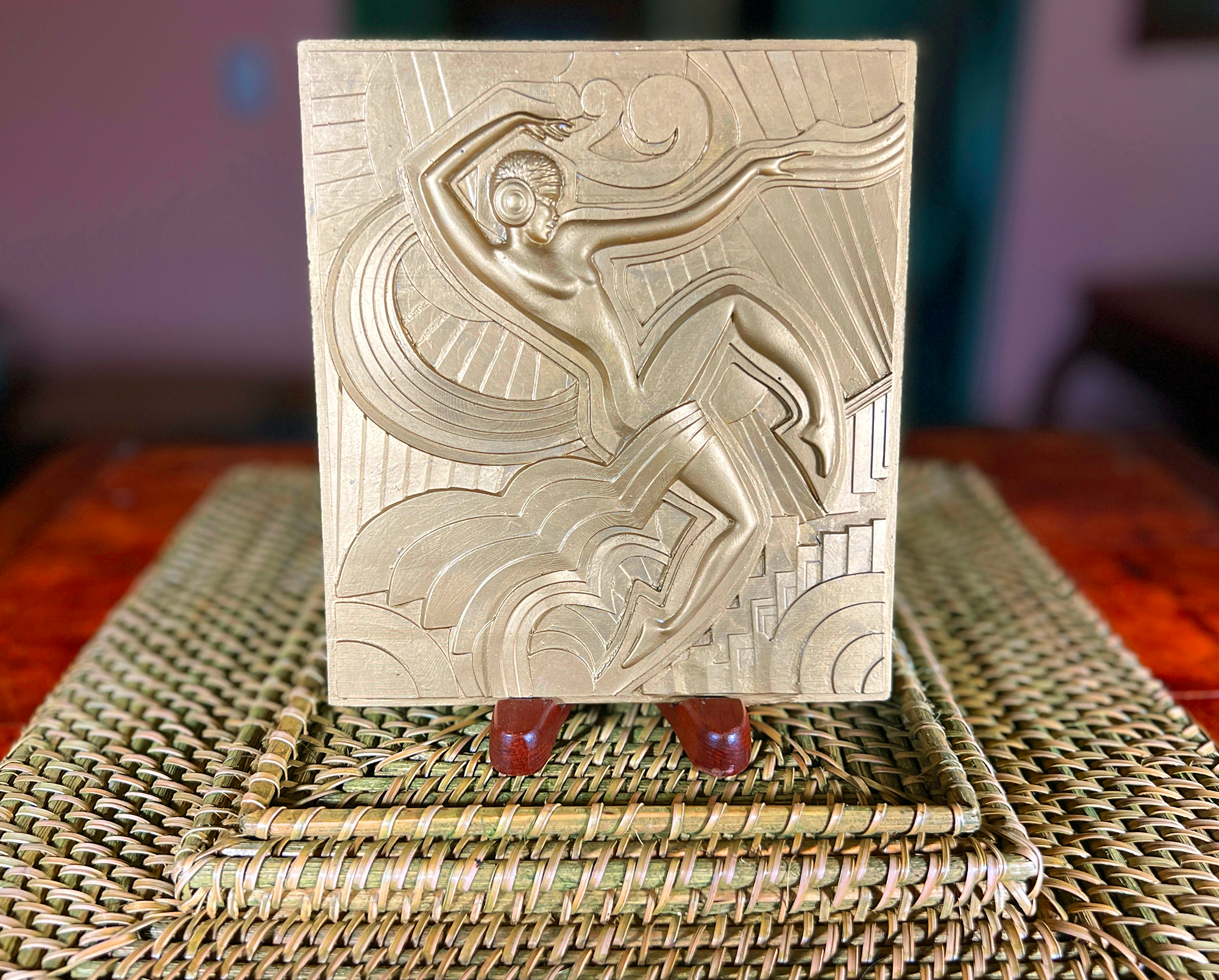
As the 1920s roared to life, so too did Art Deco—sweeping across Paris and beyond in a surge of architectural, decorative, and stylistic transformation. One of the purest expressions of that movement is the bas-relief sculpture on the façade of the Folies Bergère in Paris, completed in 1926 by Maurice Picaud (aka Pico).

This gilded stone relief, depicting a radiant nude dancer framed by geometric and fan-like motifs, isn’t just ornamental—it’s theatrical architecture at its most modern. It embodies the era’s fascination with speed, spectacle, sensuality, and stylization. What fascinates me most is its enduring influence: this single sculpture has been reproduced, adapted, and reinterpreted continuously over the past 100 years—in posters, ceramics, interior panels, even architectural replicas. It’s a foundational image, crystallizing the elegance and exuberance of Art Deco in a way few others have.
The facade for Folies Bergere is known as The ‘Shepherdess’. Originally sculpted as bas-relief by Maurice Picaud (Pico) who lived from 1900-1977. The model for this famous frieze was Lila Nikolska who was born in 1904.

In addition to the famous Picaud facade, there were two side-panels depicting comedy and drama in the classic motif but as hard deco to match the style of the central relief.

As for ‘pico’, aka Maurice Picaud, the artist who created the Folies Bergere sculptures 100 years ago, he was active around 1925-1940 working on various projects. One of those was the Montdidier Town Hall staircase painting. Although we cannot find a large body of art-deco works, his iconic Folies Bergere relief is well known to the eyes of many art-deco collectors and followers worldwide.