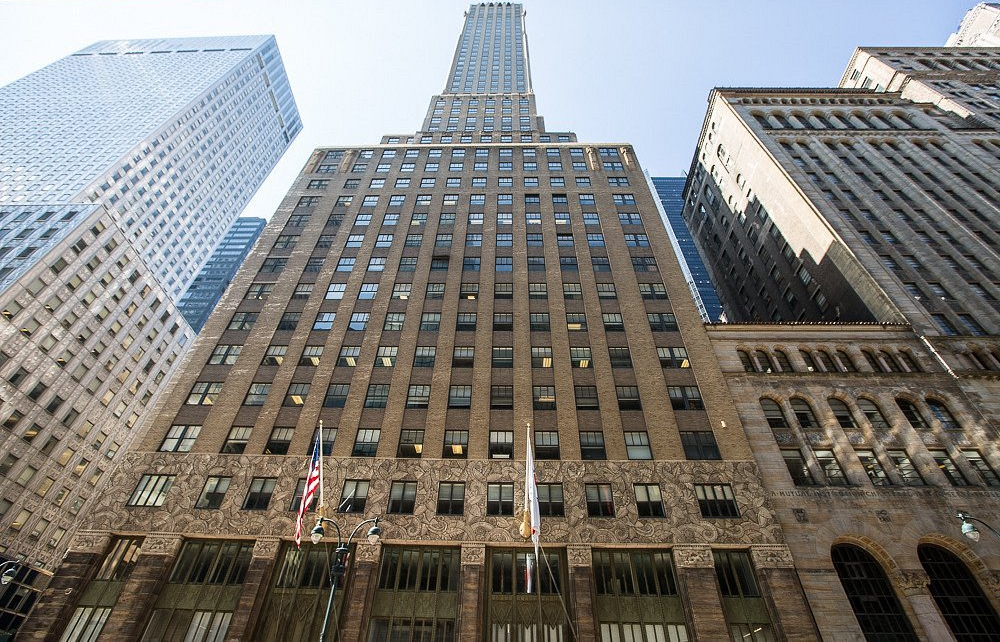
The Chanin building which stands at E. 42nd St. and Lexington Ave in NYC, represents one of the finest examples of art-deco architecture in the world. Specified by Irwin Chanin, an early 20th century developer, built by Sloan and Robertson, with input from Chanin’s architect, Jaques Delamarre and superb bas-relief sculptures by Rene’ Paul Chambellan. It serves as a monument to a future vision: ‘The Age of Opportunity’ as envisioned by Chanin himself.


History
The building was erected starting in 1927 and completed in 1929, massively adorned both inside and out with striking examples of hard art-deco in multiple but related styles. The exterior has obvious hard art-deco features spanning the front of the building in a band of bas-relief. The wraparound Art Deco frieze on the outside of the Chanin Building was created by Rene Paul Chambellan, an architectural sculptor known for his work in the Art Deco style. The frieze depicts the evolution of life, featuring plants, fish, and birds. There is also a terracotta frieze with stylized plants. Additionally, Edward Trumbull is credited for a bas-relief that wraps around the facade. Chambellan collaborated with Jacques Delamarre, the head of the architectural staff of the Chanin Construction Company, on the design of the ornament.


A Little More History
Perhaps we know what was in the mind of Irwin Chanin in 1925 when he returned from the Paris Art Deco Exhibition. Having experienced the European expression of this new design style up close and spoken with or met many of the proponents of this trend, he returned to NYC with great visions. He would embark on erecting a building which today would still be considered a monument to Art-Deco architecture. Sloan and Robertson were the architects, but Jaques LaMarre and his architectural sculptor, Rene’ Paul Chambellan, who studied in France, took on the esoteric task of making real what was a very fresh concept in the late 1920’s. Read my post on Chambellan for a little more context.
Chanin made his money building movie theaters, which were still very well attended as the nation approached the 1929 crash and subsequent depression. The building in his name had not been completed until that fateful year. He reached close to 92% occupancy by the fall of 1929 which was unheard of. His choice of the sweet location turned out to be visionary in that this ‘Terminal City’ with proximity to Grand Central Station via tunnels in the basement and a series of residential buildings going up and being occupied made for a vibrant flow of commerce in the center of the city.
His original anchor tenants were the likes of the ‘Baltimore and Ohio Railroad’s bus terminal, Kimberly-Clark Paper, Pan American Petroleum and Transport Company and Fairchild Aircraft to name a few. Sterling National Bank moved into the mezzanine on Lexington ave. It should be mentioned that leasing kept going right through the Great Depression.
Interior Features – The City of Opportunity
I myself have visited this building as a relative ran an insurance business there for a time. I may not have paid as much attention to the artworks embedded all over the lobby but I do remember some of it now that I have made a study of it. Although the management tries to prevent photographing any of the artwork, many have and these pieces have escaped to the web.
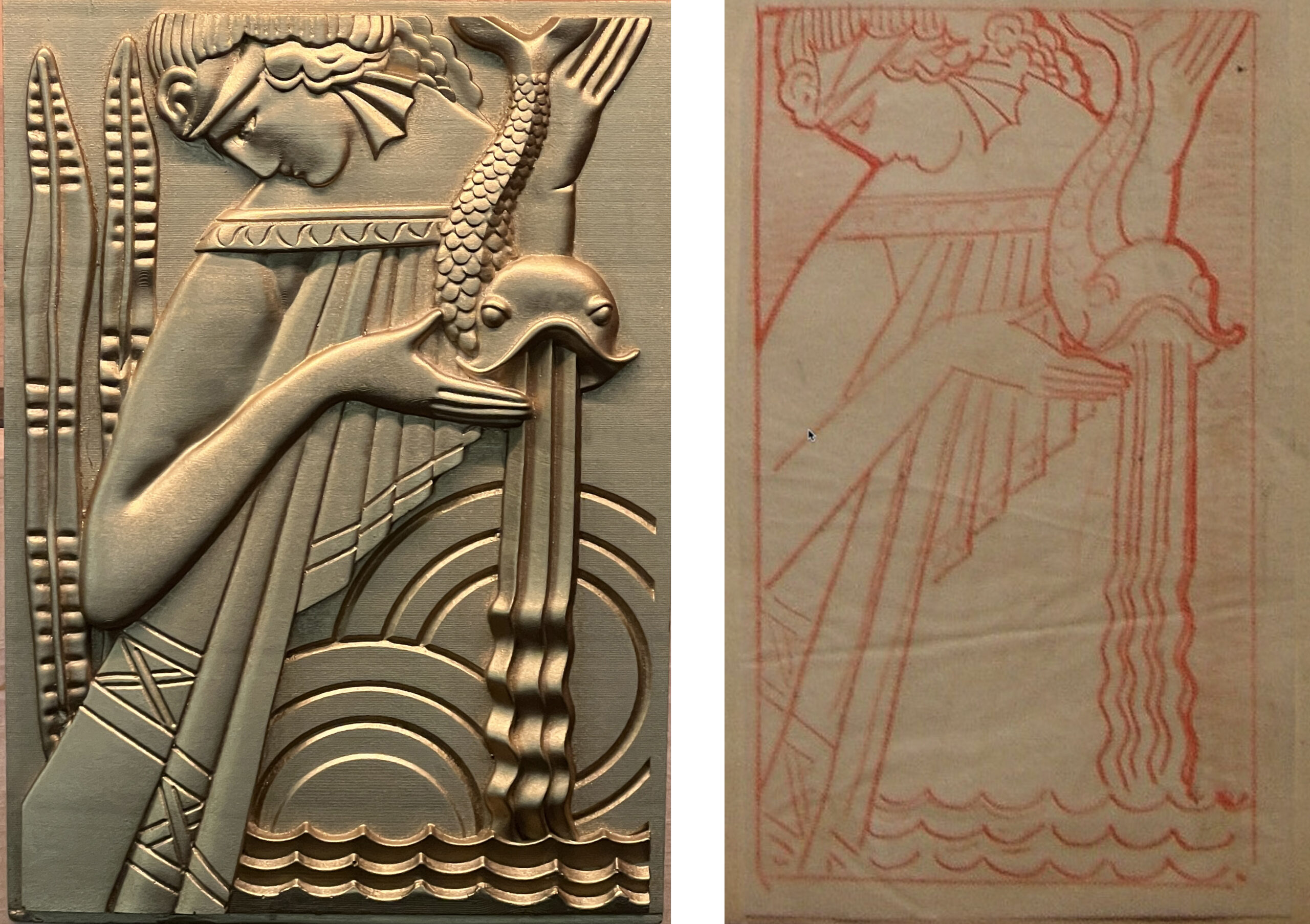
Chanin wanted to create a theme for the artwork and architecture that fit with the times and his vision of modernity. With the work of Delamarre and Chambellan, he was able to realize that vision. The reliefs that are all around the cavernous lobby depict humanity undergoing different life experiences and challenges such as ‘Courage’, Enlightenment’, ‘Achievement’, ‘Activity’ and others. All of these bronze reliefs were underlined by brass ventilation grilles that were very elaborate as once can see in the gallery below.


If you get the chance to visit NYC you must go to 42nd and Lexington avenue and gawk at the spectacular expression of the finest art-deco architecture in the world. A really complete wiki is a good place to get some background on the famous building before you go. Remember, no pictures.
Chanin Building Wiki