Few decorative objects capture the confidence of the late 1920s and early 1930s as powerfully as the Art-Deco slip-shade wall sconce. These fixtures—part sculpture, part architecture, part machinery—stood at the intersection of design, technology, and glamour. They appeared in theaters, hotels, apartment lobbies, ocean liners, and well-appointed homes, radiating a vision of the future that still feels modern nearly a century later.
Slip-shade lighting reflects a sweeping evolution in decorative arts, from French sculptural glass studios to American mass-market manufacturers, each adapting the Deco vocabulary through their own cultural lens. The fixtures we know today—whether the fine ironwork of Edgar Brandt or the accessible catalog pieces of Markel and Lincoln—tell a story of artisanship, industrial innovation, and a hunger for beauty in an era of extraordinary change.
Origins: France and the Sculptural Glass Tradition
René Lalique — Nature Reimagined in Glass


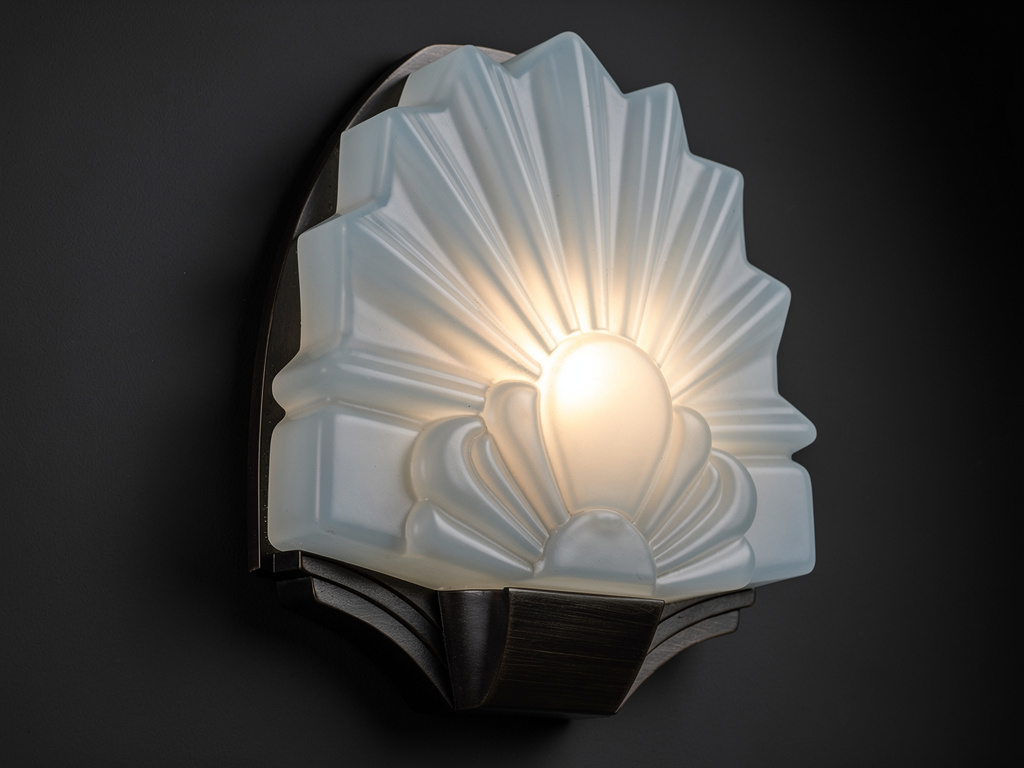
Lalique’s contribution to Art-Deco lighting cannot be overstated. His opalescent shades—often depicting nymphs, flowing botanicals, or water imagery—turned light into a softly glowing bas-relief sculpture. The glass was the artwork; the metalwork was intentionally restrained. This approach reflected France’s deep tradition of glass artistry and a preference for sensual, luminous surfaces.
Lalique sconces were typically installed in affluent Parisian residences, theaters, luxury boutiques, and grand hotels. Their cool, ethereal glow suggested refinement rather than industrial grit—Deco elegance softened through the lens of symbolism and nature.
Marius-Ernest Sabino — Bold Rays, Shells, and Opulence

Sabino favored thick, weighty opalescent glass, often with strong volumetric forms—radiating shells, stylized waves, rays. These shades were architectural in their massing, more monumental than Lalique’s dreamlike delicacy. Sabino lights appeared in cinemas, cabarets, and upscale hotels, where their dramatic glow made them the centerpiece of the interior.
Etling & Verlys — Subtlety and Underwater Light

Etling’s work leaned more delicate, with gentle floral and fruit motifs, reflecting a more intimate domestic elegance. Verlys explored swirling, almost aquatic forms—glass that seemed to capture movement, suited for quieter residential environments. Both demonstrate how French Art-Deco embraced organic motifs, but translated them into streamlined, modern forms.
Atelier Petitot — The Architectural Arm of French Deco


Petitot’s pieces combined stepped metalwork with opalescent or frosted shades, bridging sculptural glass with architectural geometry. These fixtures were found in banks, civic buildings, hotels, and modern apartments—spaces eager to express cultural sophistication through clean, rhythmic forms.
The Metalworkers: Iron, Bronze, and the Machine Age
Edgar Brandt — The Poet of Iron


Brandt’s wrought-iron designs show how Deco could be both ornamental and engineered. His sconce frames used geometric scrolls, stylized floral elements, and elongated proportions to elevate lighting into architectural jewelry. Brandt’s fixtures were installed in prestige spaces—government buildings, theaters, and the most elegant Parisian interiors.
The combination of heavy dark iron and warm amber glass mirrored Deco’s central tension: luxury crafted through the materials of the machine age.
Jean Perzel — Modernism with Precision

Perzel reduced lighting to its essentials: planar glass, disciplined geometry, clear horizontals and verticals. His sandblasted slip-shades provided diffuse, museum-quality illumination. These fixtures appeared in embassies, corporate headquarters, libraries, and high-style residences—spaces aligned with the new professional, technological world.
Perzel represents Deco’s mature phase: restrained, functional, architectural.
Across the Atlantic: The American Slip-Shade Revolution
By the late 1920s and into the early 1930s, American manufacturers adapted the high-art French ideas into mass-produced residential lighting. While decorative arts in Europe aimed for bespoke craftsmanship, American firms sought to bring Deco style to the middle class.
Markel — Catalog Deco with Presence

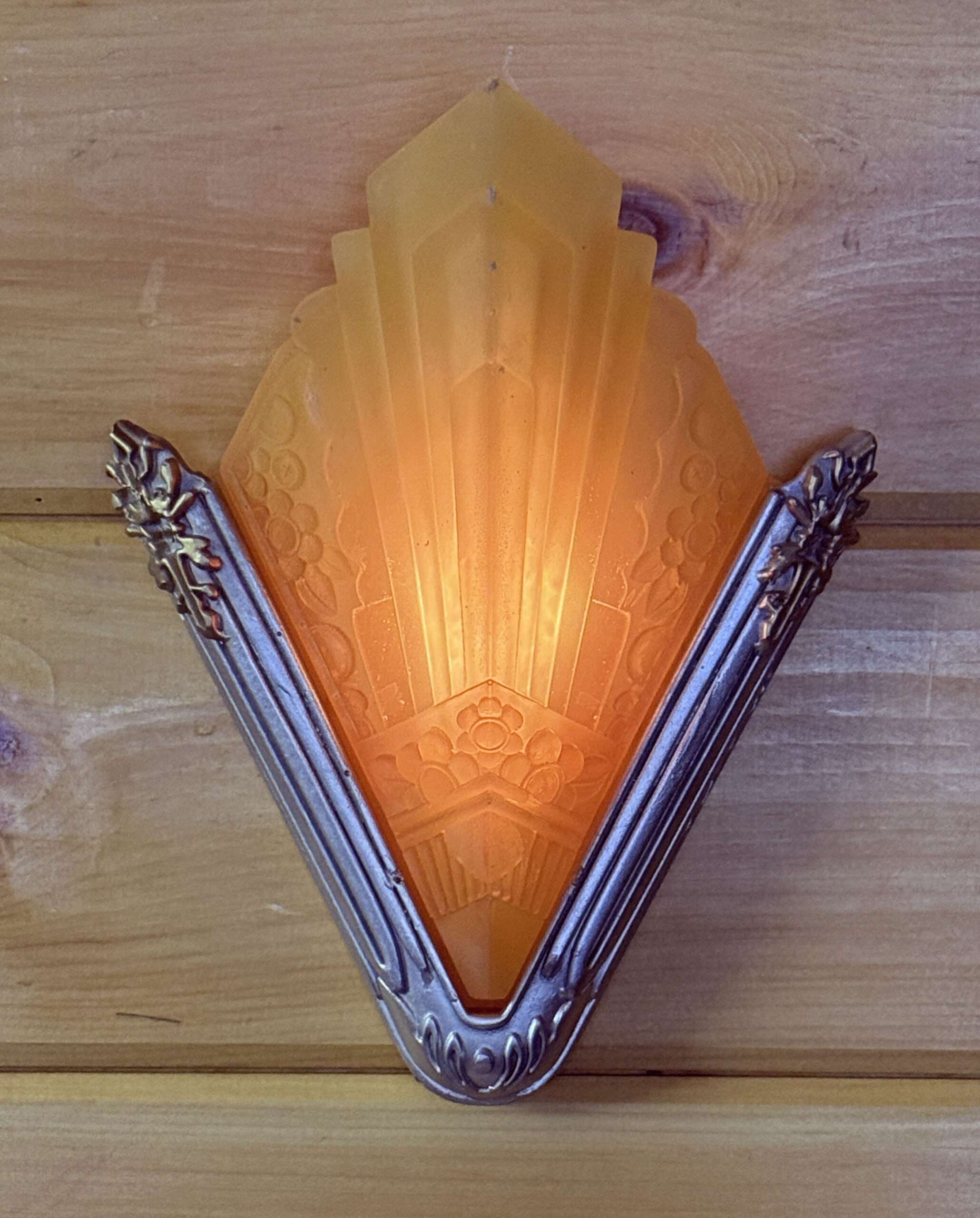
Markel’s shield-shaped shades, embossed motifs, and bronzed spelter backplates embodied mainstream American Deco. While cast quickly and affordably, these pieces still conveyed the optimism of the era. They appeared in entryways, hallways, apartments, hotels, and theaters from coast to coast.
Markel’s designs distilled Deco into crisp, graphic geometry.
Lincoln Mfg — Flame Shades and Streamlined Symmetry

Lincoln specialized in ribbed amber flame shades paired with stepped metal backplates. Their fixtures had a slightly more “electric age” appearance—dynamic, futuristic, and ideal for the growing number of electrically lit homes of the 1930s.
Miller Lamp Co. — Transitional Deco for Traditional Homes

Miller blended Deco geometry with Revivalist motifs—rosettes, Greek keys, and decorative borders. Their lights bridged the tastes of homeowners transitioning from Victorian and Craftsman aesthetics into something more modern, but not too modern.
Lightolier — Toward Modern Streamlining

Lightolier offered the cleanest, least ornamented American versions. Their opal shades and chrome or painted-metal mounts leaned toward early Modernism and the coming International Style. These fixtures were installed in more contemporary suburban homes, offices, and stylish apartments.
Why Slip-Shade Design Captures the Art-Deco Spirit
Slip-shade sconces embody Deco’s essential themes:
- Light as Sculpture
Shades were not mere diffusers—they were objects with volume, relief, and curvature. When illuminated, they came alive. - Geometry Meets Ornament
From stepped motifs to radiant sunbursts, Deco fused the sharpness of the machine age with the decorative impulses of earlier eras. - Industrial Processes Meet Luxury Aesthetics
Pressed, cast, molded, and mass-produced materials were elevated into refined, glamorous objects. - Architecture and Lighting Became a Unified Language
Deco lighting echoed the shapes of skyscrapers, ocean liners, radios, and automobiles. A sconce wasn’t just a fixture—it was part of a total design vision. - Democratization of Style
France’s artisanal glass studios inspired America’s mass-market manufacturers, making the Deco look accessible to millions.
Where These Fixtures Lived
Different styles found different homes:
- Theaters & cinemas: Sabino, Markel, Lincoln (dramatic amber glows; theatrical geometry)
- Hotels & restaurants: Petitot, Brandt, Sabino (prestige metalwork and opalescent glass)
- High-style residences: Lalique, Perzel, Etling, Verlys (sculptural glass; refined restraint)
- Middle-class homes: Markel, Lincoln, Miller, Lightolier (affordable beauty for everyday spaces)
- Public buildings: Perzel, Petitot (pure architectural clarity)
Slip-shade sconces were placed in hallways, stair landings, living rooms, dining rooms, libraries, and foyers—anywhere a warm, sculptural glow could enhance the architecture.
Conclusion: Enduring Icons of the Machine Age
Slip-shade sconces stand as some of the most iconic expressions of Art-Deco design—merging sculpture, engineering, and ornament in a perfect balance. Whether created by a master like Lalique or produced in an American factory for a modest home, each fixture reflects the values of the time:
- Optimism
- Modernity
- Craftsmanship
- Beauty made accessible
- The belief that even a hallway light could be a small piece of architecture
Today, these designs continue to inspire collectors, restorers, artisans, and contemporary makers (including us at LostArtifax). They remain timeless reminders of an era that believed in the power of design to elevate everyday life.
Image Sources:
This blog uses public-domain, creative commons and open source images as well as images exclusively created by the author. There are no copyrighted or unlicensed imagery on this site. Images created by the author are free to share by others on the internet for non-commercial purposes.