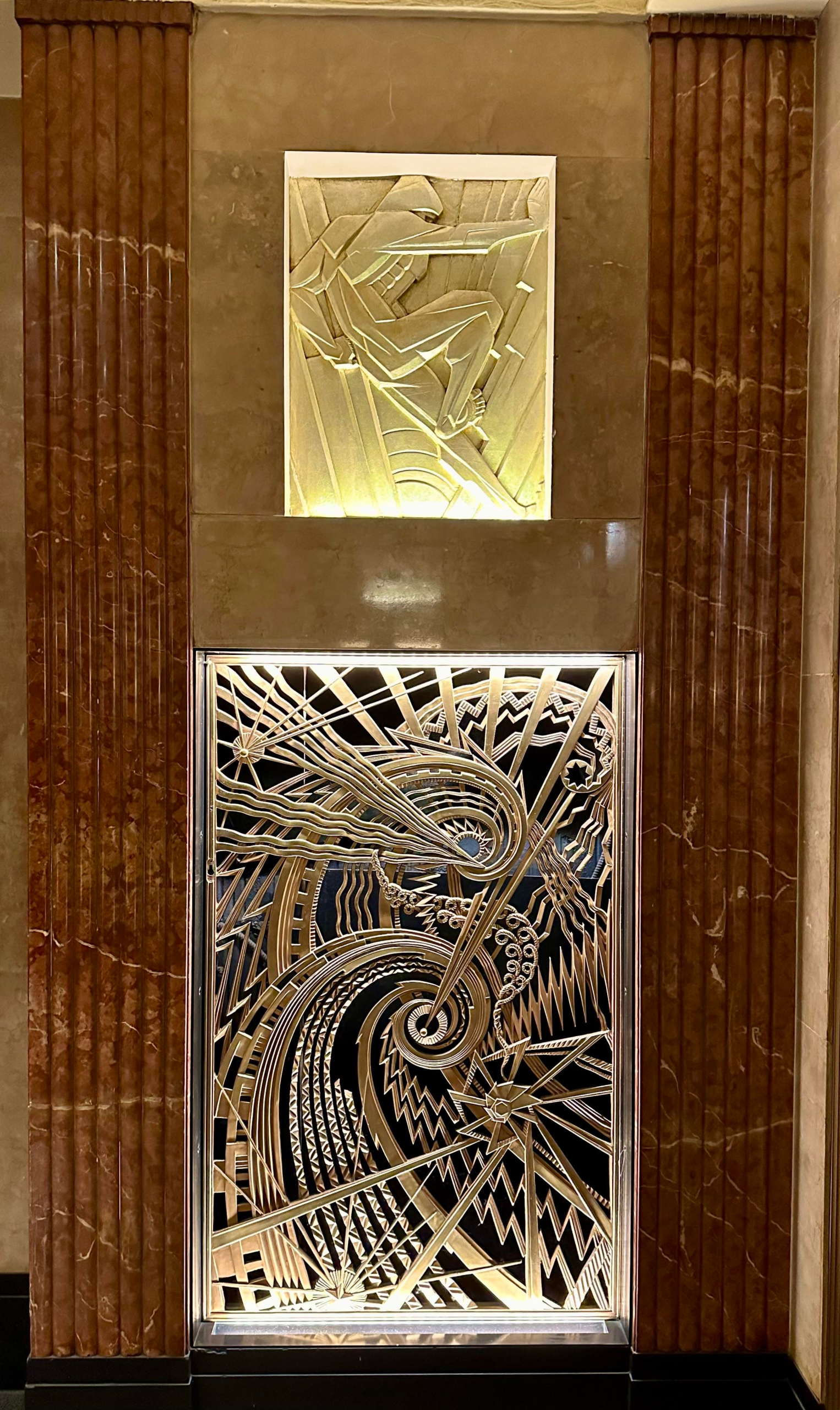
A few examples of the form from the great era of Art-Deco shows how serious it was and how many resources were committed to building with this new and exciting art-form.


Just a couple of unforgettable images of some of the most iconic art-deco architecture to ever be seen anywhere. Much of it endures but a lot of it has not.

One infamous example
of unnecessary demolition of a beautiful art-deco public piece was the Bonwit-Teller building, demolished to make way for the new Trump Tower. It was a good example of developer avarice vs. the public good.


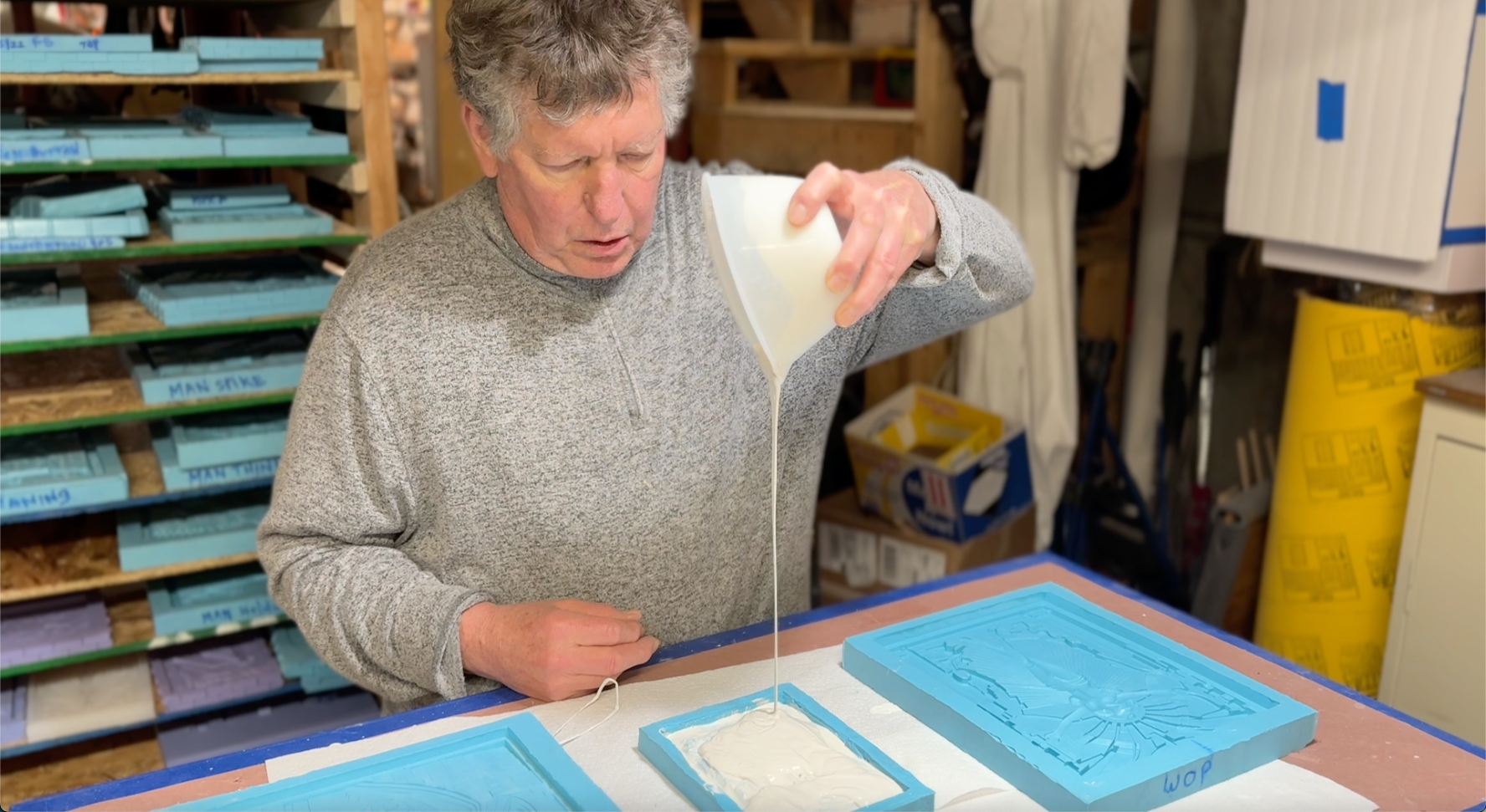
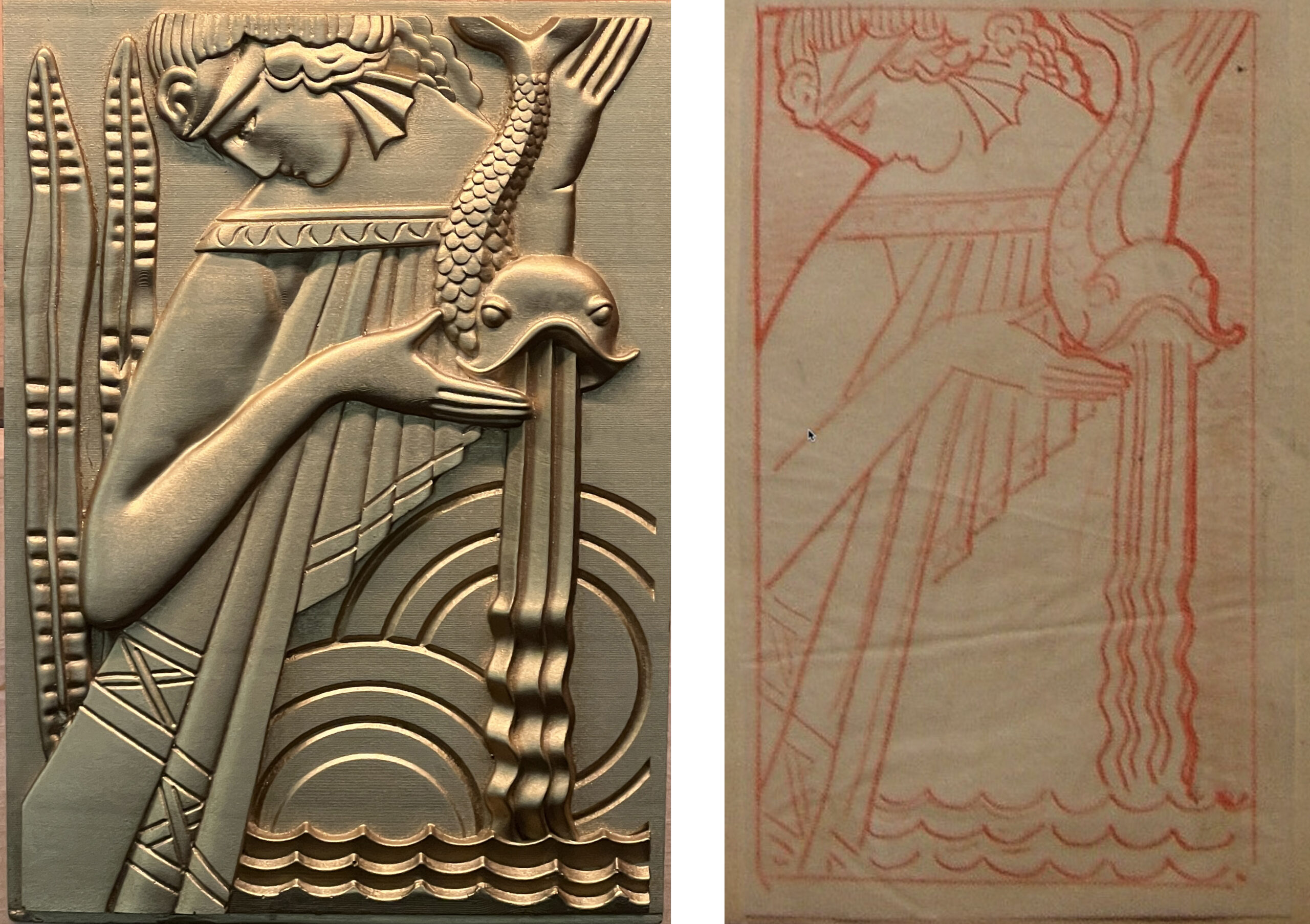
We recreated those in miniature for the Lostartifax Etsy shop. These were originally designed by Rene’ Paul Chambellan.

I thought it apropos
that as someone dedicated to recreating lost artifacts of the art-deco period, 1920-1940, I should share the source of my infatuation and love of the art form.
Something about the shapes, lines, floral elements …
Try to follow the direction of the lines and shapes in this Chambellan gate and you will begin to see what may have been going through his head when he put this onto paper in his sketchbook.


There seems to be the appearance of electricity, power and radio waves making a strong statement for the age. This was New York City, considered the cradle of progress in North America and this gate captures it perfectly.
The City of Opportunity Series in the Chanin building, 1927 in New York City
Irwin Chanin was a movie theatre builder and with his success sought to build new skyscrapers for the purpose of housing well-known US business headquarters. When he put together a team of architects and artisans, he had just returned from the 1925 Paris Art Deco exhibition full of ideas and imagery. From the results of that trip, I would have to say that he was able to fully realize his vision. The City of Opportunity Series of works including Friezes, reliefs, mosaic tile work, murals and brass gates fill the hallways and elevator doors, outside facades and exterior ribbons of themed murals, all standing and well maintained today.


French Twins Martel – Cubism, Streamline Moderne
Around the time of the 1925 Exposition de Arts Decoratifs in Paris, two brothers, already prolific sculptors were plying the stone and clay in celebration of art-deco. They were already famous for some works on display at the exposition. The brother on the right looks a little like John Lennon, right?


They were later commissioned to design and erect many of the sculptures and reliefs for the Claude Debussy Memorial in Paris.

This link https://freresmartel.blogspot.com/ has a pretty complete catalogue of their work which is vast. A couple of my favorites are:

I also love the ‘Chat’ which we reproduced in our Maker shop.


It Comes Down To a Certain Mindset
If I had to explaine what was going through people’s minds at the inception of Art-Deco as a design style, it would best be covered in Bevis Hilliar’s 1968 book ‘Art Deco of the 20s and 30’s. Don’t expect to find a single line or paragraph describing how art-deco came to be. You will have to (and want to) read through this great tome to come away with the knowledge of the emergence, perpetuation and thriving of Art-Deco (coined by Hilliar himself when he was 28 in 1968) from 1925 and happening between the wars.

I have developed the eye for deco over a couple of decades but nothing brings it into better focus than having seen up close some of the NYC bas-reliefs and the fine architecture of the time.
In recreating the plaques for my Etsy shop, I have come to appreciate the elements, motifs and ornamentation in the art-deco style which have appeared in schools, theaters, post-offices, government buildings, bridges, power companies and office buildings. If you just do a google image search with the term: ‘art deco architecture‘ your eyes will be treated to many of the iconic expressions of the form and its common themes around dynamism, streamlining, power, speed and mechanization that happened in the 1920’s and 30’s.


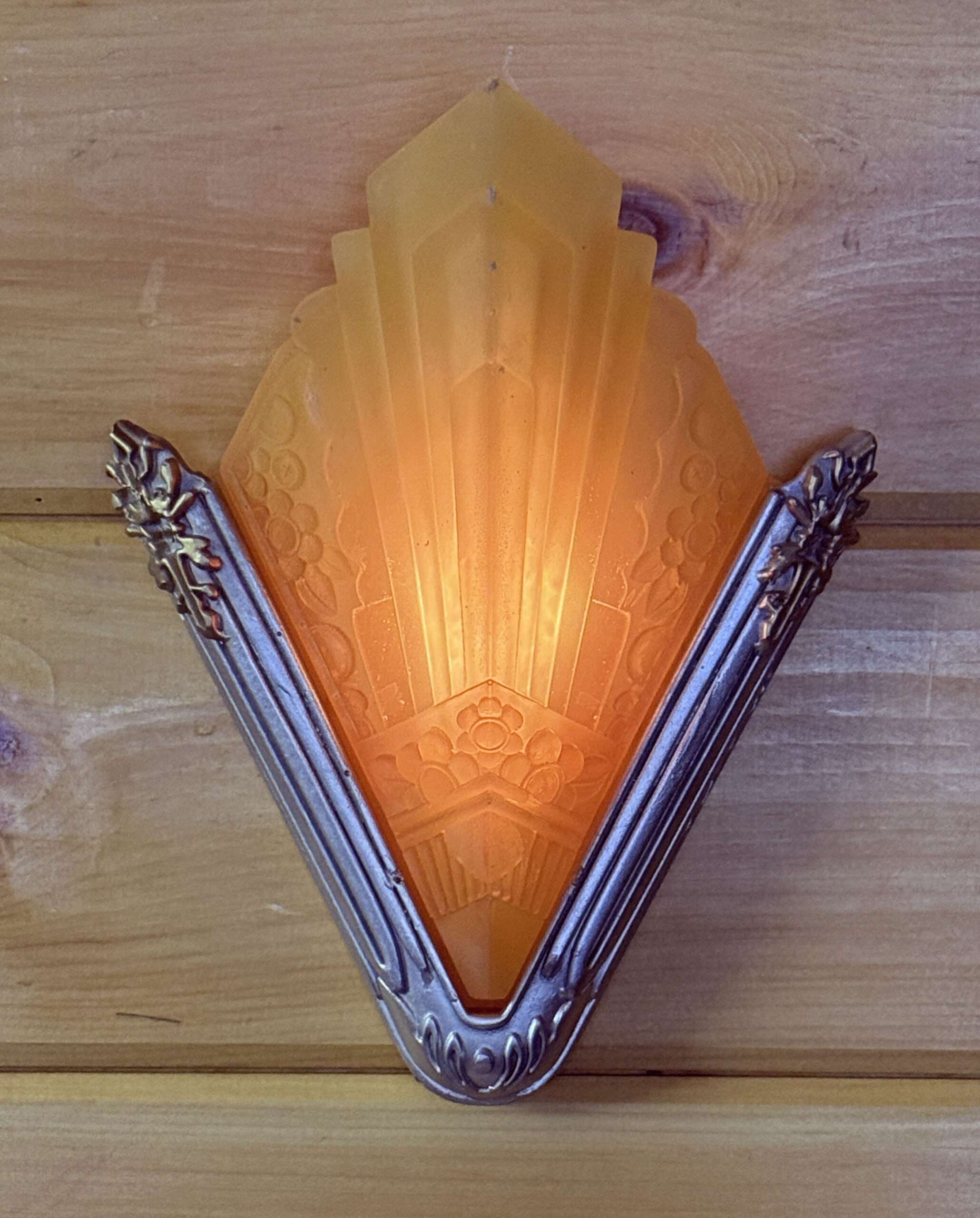
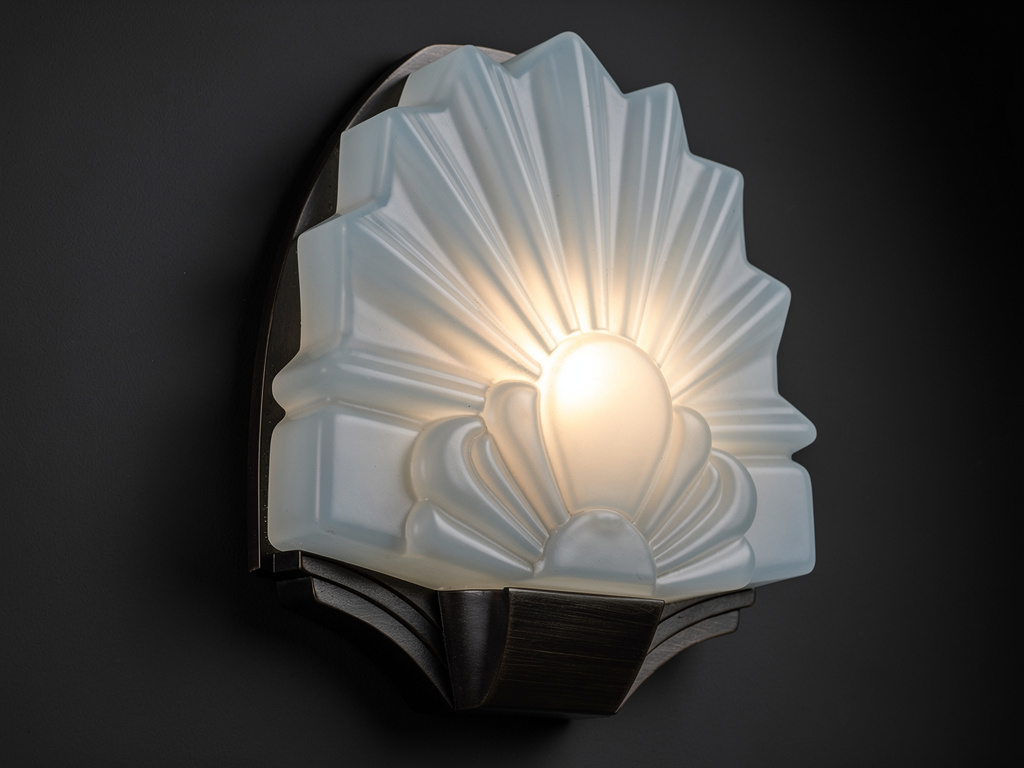
Try another search for ‘art deco accessories’ and you will immediately see jewelry, lighting, kitchen items, furniture and will train your eye to the form which makes it ‘art-deco.
Try one more: ‘art deco theaters’ for some eye candy.
In my humble opinion, the eye becomes the entry point for learning what art-deco is and looks like. You develop that by browsing hundreds of images of art-deco and patterns begin to emerge which allow you to recognize it next time you see it whether on a building, furniture, boat, hotel, school, bridge or lobby.
I recently volunteered to help with the Antiques Roadshow in Boothbay, Maine. I spent 12 hours in front of 5 jewelry appraisers watching every person bring some kind of heirloom for evaluation. When a few pieces of Art-Deco brooches, rings or pendants came through, I immediately recognized them as deco, as did the appraiser. They have the eye and I am sure they developed that by looking at 1000’s of genuine and not so genuine art-deco pieces over the years.
Good luck developing your eye.