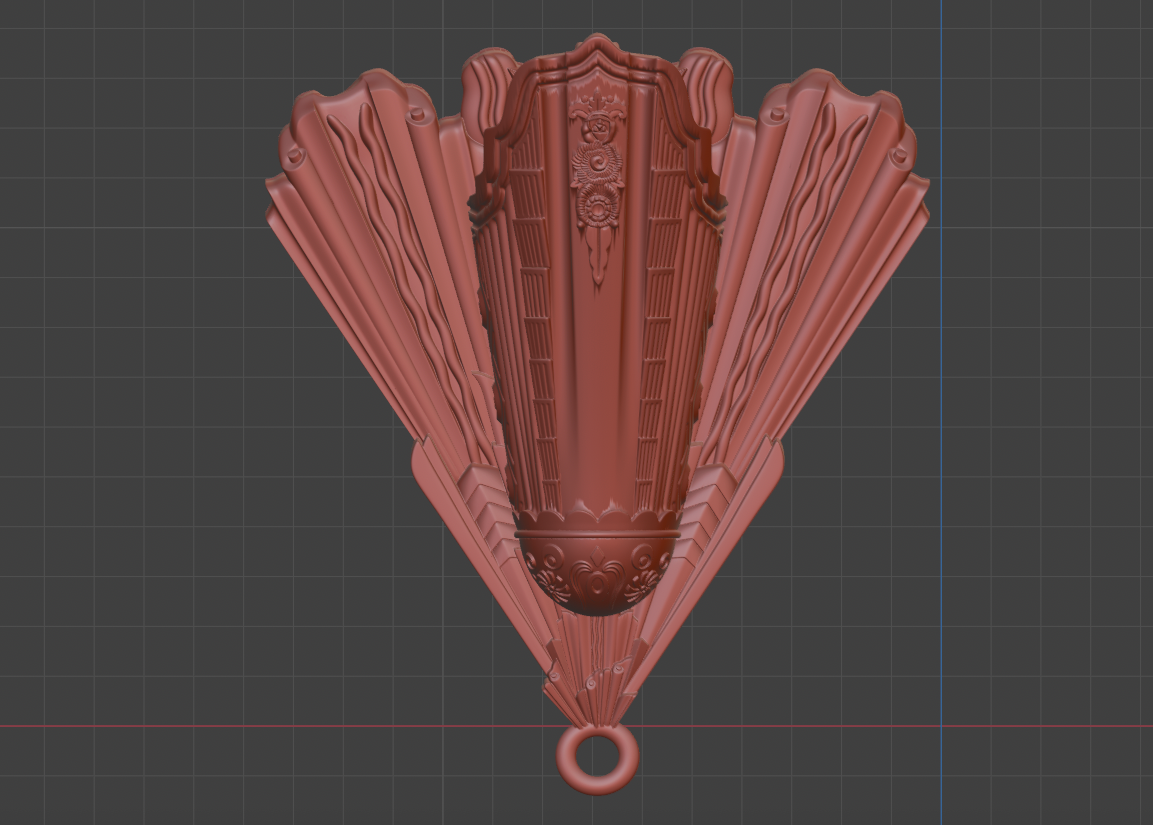
For anyone trying to replicate what we do, first I should say that the 3D modeling process is by far the most time-consuming and complex. The reason we do it is to have a precisely alterable digital model that can be adjusted or re-used in other projects once it is done.

It is at this stage that we make a 3D sculpture of our impression of the piece we want to produce. It takes some years to become proficient in 3D modeling to the point where you can bend, shape and hone a piece of digital clay into a perfectly rendered 3D bas-relief.
Historically Speaking
It was probably easier for the original sculptors who used clay or plaster and a drawing possibly overlaid onto the blank. Using an additive process, they built up features by adding clay and then subtracted excess material until left with a finely honed version of what they envisioned. This is similar to how today’s clay sculptors work and how digital sculptors work. Once the clay is set, some kind of mold needed to be made that would allow a faithful reproduction to be made. In the case of many sculptors in the art-deco era, these molds were one-time use as it was a commission for a single rendering and not duplicates. The mold would allow them to run the casting again if the first one came out with unrepairable flaws. They could have created the final piece in plaster in this additive method and once the front was set, they could add backing for strength and be done.

Lostartifax Mold Making
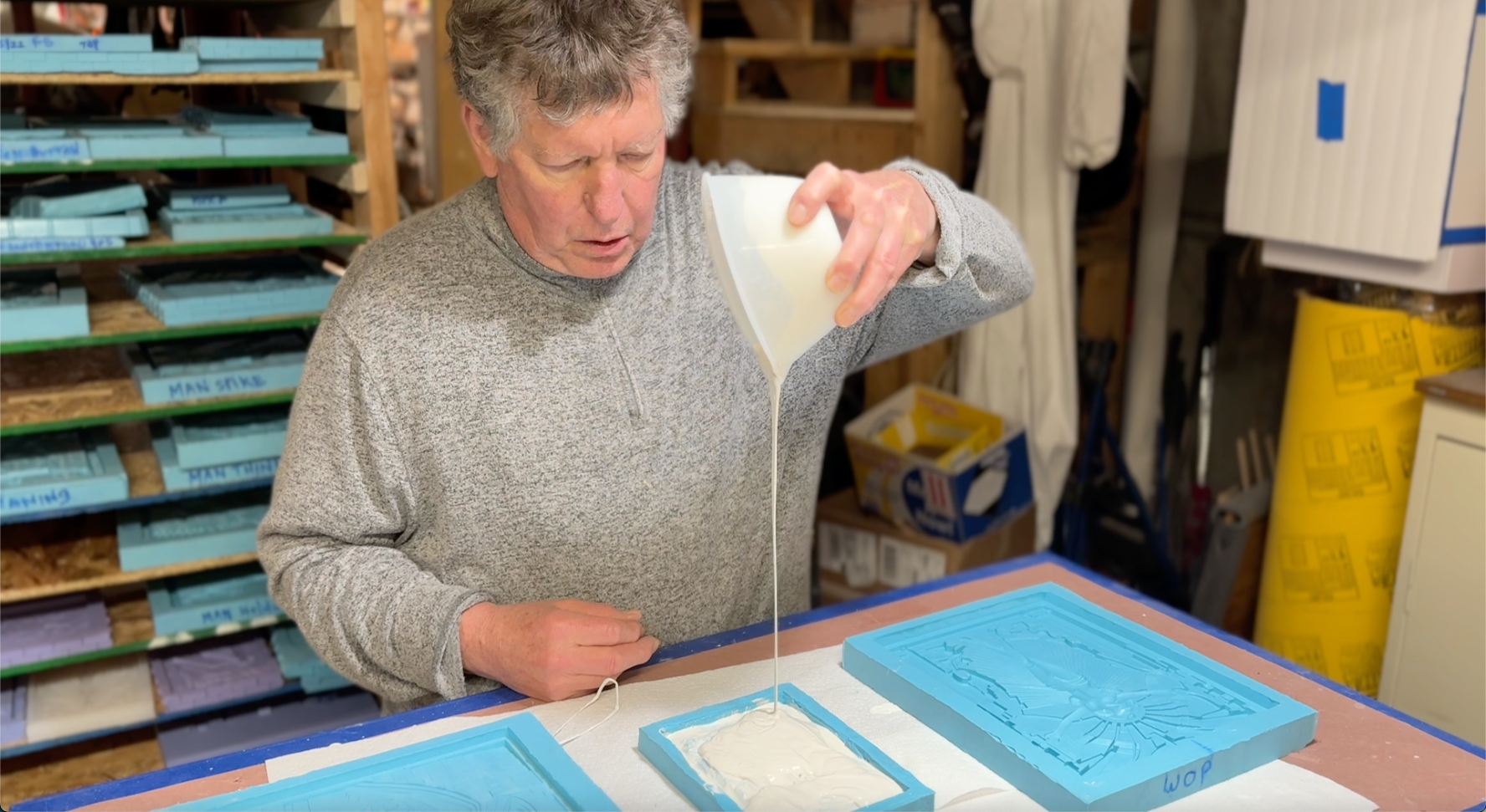
To make a mold, I start with the 3D printed model of the plaque which is a positive version of the model. Making a mold from it results in a negative version (reversed relief) which is what I cast into.


In the video ‘Making of Electro Man’ I show how I build a mold box out of legos and then pour silicone over the model within the mold box. Legos seem to hold the silicone from leaking out and I don’t have to construct a mold box from foam core or other materials.
This takes several hours to cure hard enough to cast into.

As one can see, the main difference between what real-world sculptors did and how I approach it is that the sculpting takes place in the digital domain where I can endlessly (if I choose) ‘carve’ the model until it looks perfect. If I were doing this with clay, it would eventually be too dry to sculpt and I may have to wet it down, replace or cut off some clay. Could get messy. The ‘undo’ feature comes in very handy in digital.
Here is a quick sample of the digital sculpting of the hair of the Folies Bergere’ model.
Obviously, I am tracing over an image of the folies bergere in order to faithfully recreate the look and feel of the original. A master sculptor might reproduce a work by having the original to the side of their work surface and glance back and forth. This is done virtually, in the software as you can see in the video.
The Selection Process
Obviously, our choices are based on aesthetics and the relevance to art-deco sculptures from the era. We can’t always recreate something just because we love it or is beautiful. It has to possess some practical characteristics for our process. We favor low to high bas-relief, figures that embody some of the styles of the era such as streamline moderne, cubist, zig-zag, space deco, machine-age, Egyptian deco, floral etc.
The practicalities involve having just the right amount of detail that can be rendered in plaster where molding and casting will not result in flake off or detail destruction. Remember, the casting process must be repeatable and accurate so everyone gets what we display on the Etsy shop. We tend to lean towards big, sweeping, rounded figures and features that express the art-deco mystique in stark ways. Curved features, not so thin lines and not too small ornaments make for good castings. There are some pieces we just had to do and you can see in this gallery here what we mean.


Encouragement from Customers
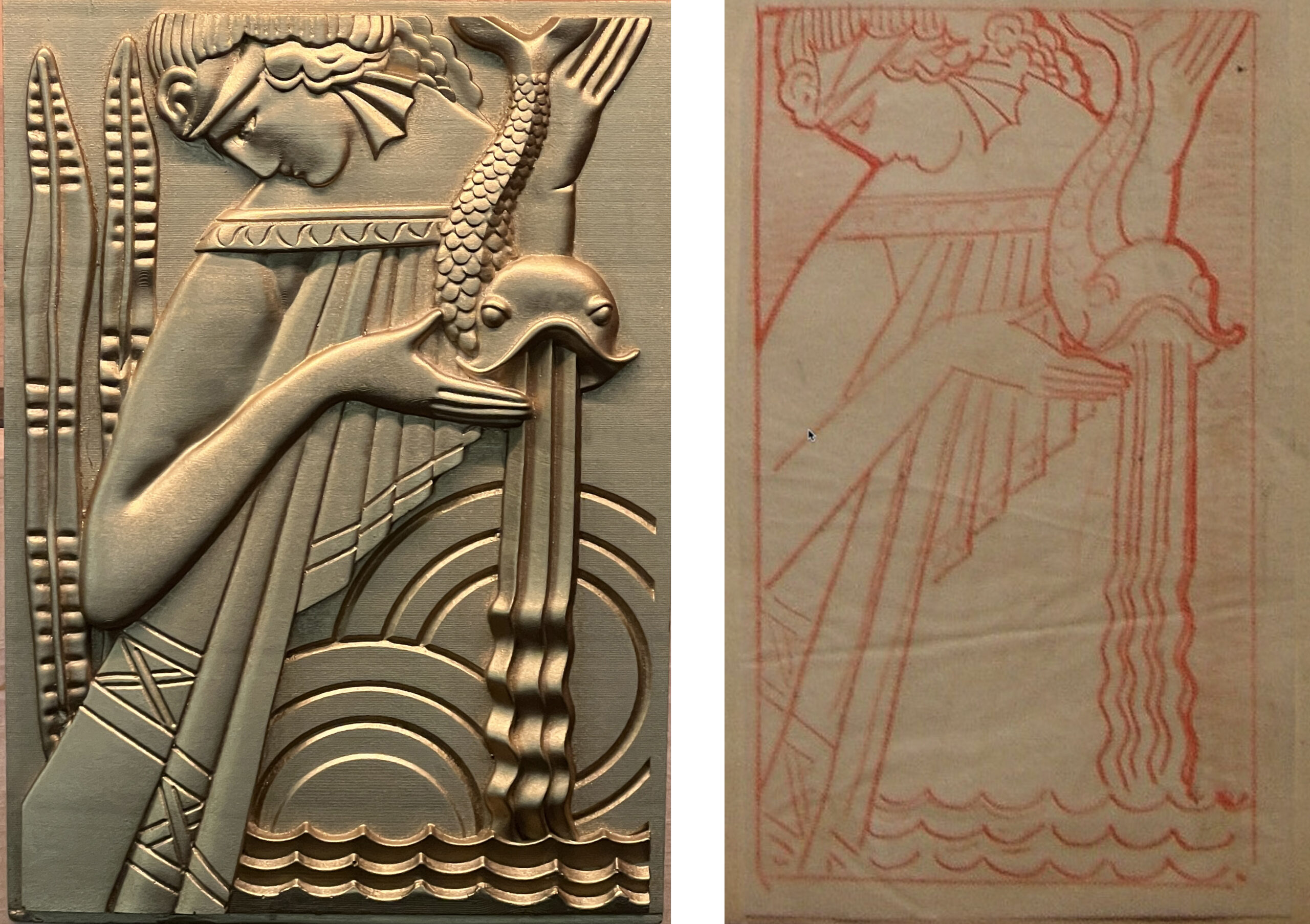
Woman of the Sea in the gallery above came from the unlrealized sketchbook of Rene’ Paul Chambellan. On occasion, we will design new plaques from suggestions by customers. One of our customers in Scotland, asked us to recreate the two plaques to the side of the Folies Bergere facade in Paris.


To Sum Up
Honestly, Irene (spouse) weighs in on design decisions as it is her eye for art-deco that schooled me to where I am today. I usually will not make something she hates but sometimes I have to convince her that it will be a hit before I can put in the effort. She has chosen well because the hit rate on success is at the 95 percentile of her choices. As I alluded to before, I am open to suggestions from potential buyers as they bring their taste and eye to the process and that is important to me. You should do that too.